Showing posts with label Christmas movies. Show all posts

Friday, December 22, 2017

Christmas Movie List


Just for fun, and to avoid actually doing anything constructive, I've made a list of "Christmas Movies" as suggested by.. the internet. Next year, I promise to bring in a "made-for-TV movie' expert, but for now, I'm sticking with box-office productions,
(However...check out my links below!)

The oldies (yes, these were oldies when I was a kid): 
A Christmas Carol 1951, starring Alistair Sim
Christmas in Connecticut 1945, a comedy with Barbara Stanwyck and Dennis Morgan
White Christmas 1954, a musical with Bing Crosby. Rosemary Clooney and Danny Kaye
Holiday Inn 1942, a musical with Bing Crosby and Fred Astaire
Shop Around The Corner 1940, a romance with Jimmy Stewart and Margaret Sullivan
The Bishop's Wife 1947, a comedy with Cary Grant and Loretta Young
Miracle on 34th Street 1947  (and again in 1992), with Maureen O'Hara
It's a Wonderful Life 1946,  with Jimmy Stewart and Donna Reed

And some consider these 'Christmas' tales:
The Apartment 1960, a comedy with Jack Lemmon and Shirley MacLaine
Meet Me in St. Louis 1944, a musical with Judy Garland

"More recently" we have:
A Christmas Tale 2008, a dark drama with Catherine Deneuve
Nightmare Before Christmas 1993, a Tim Burton animated movie
Arthur Christmas 2011, animated
Mickey's Christmas Carol 1983, animated
Ernest Saves Christmas 1988, goofball comedy
Prancer 1989, family tale
Elf 2003, comedy with Will Ferrell
Home Alone 1990, comedy with McCauley Culkin
A Christmas Story 1983, with Peter Billingsley and Darrin McGavin
National Lampoon's Christmas Vacation 1989, comedy with Chevy Chase
Love Actually 2003, adult comedy with Hugh Grant and ensemble cast
Bad Santa 2003, adult comedy with Billy Bob Thornton
Scrooge 1970, with Albert Finney and Alec Guinness
Polar Express 2004, family animated movie
The Santa Clause 1994, comedy with Tim Allen
Fred Claus 2007, comedy with Vince Vaughn
Muppet Christmas Carol 1992, family animated movie
How the Grinch Stole Christmas 1967, family animated movie
Jingle All the Way 1996, comedy with Arnold Schwarzeneggar
Christmas with the Kranks 2004, comedy with Tim Allen
The Holiday 2006, adult comedy-drama


And who can forget these ?classic Christmas stories:
Batman Returns 1992, with Michael Keaton
Die Hard 1988 with Bruce Willis
Kiss Kiss Bang Bang 2005, adult drama with Robert Downey, Jr.
Edward Scissorhands 1990, with Johnny Depp
Gremlins 1984


My favorites are in the first list, and I'll admit to taking my kids to see Home Alone 1 and Ernest Saves Christmas. Thanks to cable tv in the 90s, I've seen plenty of the others, but not all.

What did I forget? What movies will you watch this year? Which movies from the list would you like to see this holiday season and why?

Just for fun, I'm adding links to more Christmas movies that you'll ever need! Go check them out and then come back and Thank Me. Yes, You're Welcome!


Buy Desert Duet for 99cents or Free on KU
Merry Christmas from Humbug. Wish You Were Here!

It’s 1933 in the good old US of A. In the midst of drought, the Depression, and gangsters on the lam, America finds solace in Hollywood's Golden Age. 

Ex-pilot Eugene Tanner, determined to pen the lyrics for the movie industry's first "Best Song" award, books a rushed December stay at the remote Humbug Creek Guest Ranch (A Gold Mine of a Getaway!) Where better to find inspiration for an epic Western, than amid all that trail dust and burnt coffee? 

Thea Knight gives up her short holiday break from the studio’s costume department to play cowgirl hostess at her family’s struggling guest ranch. But instead of helping their witty and handsome guest, she becomes his biggest distraction. Old flames and past regrets take a backseat when the pair become embroiled in a ghost town mystery marring Humbug, Arizona’s rustic Christmas. Thankfully, the cowgirl is as fast with her Winchester as she is with her comebacks.

Follow my Amazon page for all the new releases in 2018!


Friday, November 24, 2017

The Man Who Invented Christmas


As soon as I saw the trailer for The Man Who Invented Christmas, I put the movie on my must-watch list. Just see for yourself:


Charles Dickens (played by Downton Abbey’s Dan Stevens) was the most famous author of his day. By 1842, he was 19th century rock star. And then, bad reviews and poor sales left him floundering. By October of 1843, he feared his career was over. And that was when he got the idea for a short Christmas book.

When his publisher balked at the prospect of getting a yet-unwritten book published and distributed in six weeks, Dickens borrowed enough money to self-publish the story. But could he get A Christmas Carol written, illustrated, printed, and in stores by Christmas?

Just how big a gamble Dickens took becomes more obvious when his friends and associates pointed out that Christmas wasn’t a major holiday at the time. Much of what we consider a “traditional” Christmas—decorated trees, cards, even many familiar carols—only came into vogue in the Victorian era. Dickens book (spoiler alert, he did get it done in time—but you knew that already) was one of the foremost contributors to the development of our modern notions of Christmas.

A Christmas Carol is an annual favorite at our house. We have several print copies (abridged and unabridged), the Patrick Stewart audio version, the musical Scrooge on video, and I think even the Muppets version on video. My husband and eldest son were in a community production of Scrooge some years back, as Bob Cratchit and Tiny Tim. The more familiar you are with that story, the more you will enjoy this movie since it is loaded with lines from the book.

A lot of the movie deals with Dickens’ creative process as a writer, particularly where he got his inspiration and how he developed his characters. He has entire conversations with his characters, and Scrooge (Christopher Plummer) practically steals the show.

Don’t be misled by the trailer for TMWIC. The movie itself has numerous darker moments and contains more depth that one would guess. Unlike other authors of the time, Dickens used his writing to bring attention to the problem of poverty in industrialized London. In addition to the 1843 setting, it includes several flashbacks to a pivotal event in Dickens’ own unhappy childhood. The two timelines converge at the end in a surprising way.

TMWIC is in a limited number of theaters. We had to drive about 40 minutes to see it. It was worth it thoughmy husband loved it so much, he analyzed it the entire way home. I give it 5 "God bless us, everyones" and 0 humbugs.


Friday, December 16, 2016

The Four Million


Edwardian-era New York City was a study in contrasts. Recently arrived immigrants from southern and eastern Europe packed into tiny tenements only miles from the mansions of the rich industrialists who employed them in their factories. The same ocean liners that transported the “huddle masses” eager to find a new life in America also carried Europe’s impoverished aristocracy, eager to marry their sons to the daughters of America’s high society. Ward McAllister dubbed these well-heeled and well-connected the “Four Hundred,” the most important people in America. The number was supposedly based the capacity of Caroline Astor’s Newport mansion ballroom.


On the surface, William Sidney Porter would seem to have had a fair amount in common with Ward McAllister. Both sons of the South—McAllister was the child of a George judge while Porter’s father was a North Carolina doctor—married heiresses. However, their lives took very different paths. McAllister followed his father into law, made his fortune in California, and returned to the East to live a life of wealth and ease.

Porter, however, took longer to find his place in the world. His first job was in his uncle’s drugstore, where he eventually became a pharmacist. However, after a move to Texas, he tried a number of jobs, including ranch hand, bank teller, and journalist. His sloppy bookkeeping during his years at the bank led to an embezzlement charge. William skipped bail and traveled to Honduras (where he coined the term “banana republic” to describe Central American countries with unstable governments). But his wife’s impending death from tuberculosis drew him back to America, and he turned himself in. He served three years of his five-year sentence before being released early for good behavior.

It was during his prison years that he began to write under various pen names to keep his identity as a convicted felon a secret. After his release, he continued to find success as a writer of short stories, and he eventually moved to New York City. His stories focused on ordinary Americans and became known for their “twist” endings. His most enduring work is a Christmas story that appeared in a collection called The Four Million. The title is a play on McAllister’s “Four Hundred.” The population of New York City at that time was approximately four million, and Porter—who had become better known by his pen name O. Henry—chose the name to show he considered every one of them as important as the famous “Four Hundred.”

You are probably familiar with O. Henry’s “The Gift of the Magi” about an impoverished young couple who sacrifice their most valuable possessions for each other. It’s in the public domain, so give it another read to celebrate the season. Or watch one of the classic versions available on Youtube.


Then enjoy a couple of spoofs on this timeless holiday story.

From Studio C, what would happen if a modern couple faced the same situation as Jim and Della?


A couple people added some acting to the Adventures in Odyssey radio version known as Gifts for Madge and Guy. Here's the last scene:


Monday, December 21, 2015

Like/Dislike Animated Christmas Specials? Grab Some Cocoa and Let's Dish!


by Susanne Dietze

My kids are home this week on Christmas vacation...it's a fun week of sleeping in, doing crafts, baking (click the link when you're done with this post!) and watching Christmas specials with the family.

Here on the Inkwell, we've shared some of our favorite Christmas movies, but I can't remember dishing on our favorite animated specials before. Many of them were part of my childhood--maybe yours, too--and they're still fun to watch ... although I may not experience them the same way now that I'm an adult.

So let's dish on them. What do you like? What's no longer your favorite?

(I guess I should say SPOILER ALERT. I'm going to chat as if you've watched these shows, too. If you haven't watched any of these shows and want to experience them for yourselves first, come back to this post later.)

(NOTE: This is just a fun conversation.I don't wish to offend anyone by sharing what I like/don't like.)

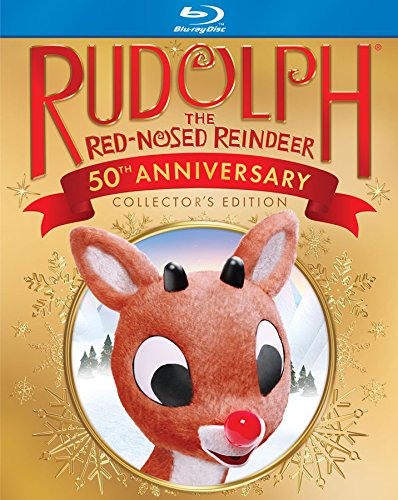
Growing up, I loved Rudolph (1964). It remains an undisputed favorite. Some reasons I loved it?

  • Rudolph is so sweet!And I like the message: we all have unique gifts.
  • It was visually appealing to me as a kid. I loved the pastel pink-and-blue outfits the elves wear. There's still a big part of me that loves candy-colored Christmas decor.
  • I love when Hermey impersonates a pig. ("Oink, oink." "Put some heart into it, boy!" "Oink! OINK!")
But now that I'm an adult? Well, there are a few things in Rudolph I don't like.
  • Santa is...grumpy, to say the least.Upon seeing newborn Rudolph's "unfortunate" red nose, he makes a snarky comment and dismisses him as unfit. He's also mean to his elves, who work hard rehearsing a song for him, and he is crabby with Mrs. Claus. 
  • It's sexist. This may reflect the times in which the show was produced, but I cringed when my kids heard the narrator insist the womenfolk need to stay home and then later on, rather than mourn Yukon Cornelius, get returned back to Christmastown.
What are your feelings on Rudolph?


Another supremely popular Christmas show is, of course, Charlie Brown (1965). It's never worn out its welcome. 

A Charlie Brown Christmas turns 50 this year, which is cause for celebration. It's even featured on holiday stamps, available from your local post office.

Things I like about it:
  • Linus' reading of the Gospel. It may be the only Gospel message some viewers ever hear. The characters also sing Hark the Herald Angels Sing. That doesn't happen often anymore on TV.
  • Its focus is on the true meaning of Christmas, not commercialism.
  • Adding to that theme, the hilarious uber-greedy Christmas letter Sally dictates to her brother always makes me chuckle.
  • The scene of Charlie Brown skipping, his heart full of love, is sweet.
  • The Vince Guaraldi score!
Things I don't like:
  • The Mean Girls (Lucy and the gang) seem to have come around by the end of the show. For the holiday, anyway. Then it's back to the usual name-calling. Lucy's such a bully.


Another classic produced in the 60's is How The Grinch Saved Christmas (1966). This Dr. Seuss tale is about the Grinch who lives above Who-ville and is determined to steal every last vestige of their Christmas celebration.

I like:
  • The message that Christmas is not about things. Or roast beast.
  • The idea of someone's heart growing multiple sizes.
  • Max the Dog.
  • The way the Whos welcome the Grinch into their community. No shame. No punishment. Just love.
I don't like:
  • The Grinch scared me when I was small. There. I admitted it to the world.


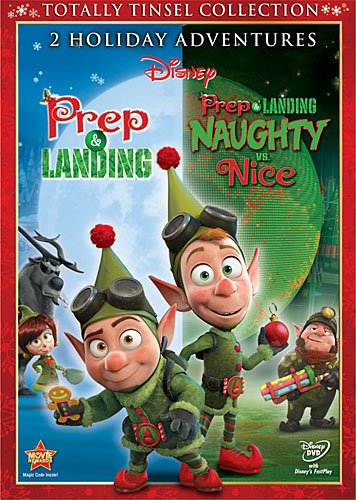
A more-recent show I like? Disney's Prep & Landing (2009). Watching it is a new tradition for me (as is watching one of its sequels, Prep & Landing: Naughty vs. Nice, which usually follows it on TV).

It's the story of Wayne, a Christmas elf who is part of the elite "Prep and Landing" team sent ahead of Santa on Dec 24th to ready homes for the Big Guy's arrival. Wayne's had this job for 227 years and wants a promotion--but he gets a newbie partner, Lanny, instead. And a very, very bad attitude.

Why do I love this show?

  •  It starts with my favorite puts-me-in-the-Christmas-mood song, Nat King Cole's version of "The Christmas Song".
  • I love, love, love how hapless Lanny says "sorry" whenever he makes a mistake. Which is often. Our family has an inside joke of saying "sorry" just like Lanny.
  • The blink-and-you'll-miss-them messages on the elves' mugs are hilarious.
  • The message of forgiveness and redemption is sweet.
What I don't like?
  • Nothing. Seriously. This has been my favorite animated show for the past few years. Wayne's unlikable for a while but his repentance is heartfelt and sweet.

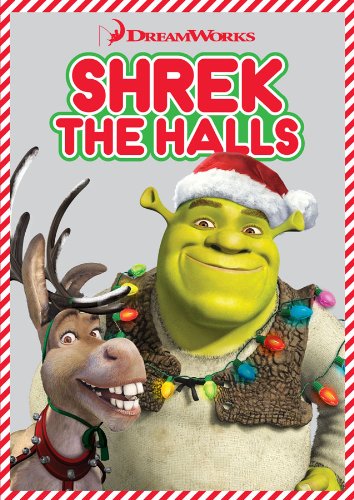
Shrek the HallsNow for a bit of controversy. Some people hate Shrek and therefore don't care for Shrek the Halls (2007). I like it. Here's why:
  • I like the message that Christmas isn't about any one person, not even our children. It's about something More. (The show doesn't say what that is, but neither does the Grinch. Same theme.)
  • It sounds corny, but when Donkey says there's no wrong way to "do" Christmas, you just "do it", I felt lightened! I don't have to put on the perfect meal, wear the right thing, or live up to someone else's expectations. Family is messy. Christmas can be messy.
  • The scene of Gingy's horrible Christmas, when a Godzilla-like Santa eats his gingerbread girlfriend, is a family classic around here. We quote Gingy, "You weren't there!"
  • Likewise, we love Puss and Boots. When he gets distracted by the ornament...LOL.
What I don't like?

  • Yes, Shrek is crass. There is bodily humor in the episode. If you are turned off by burps, etc, don't watch it.


I feel like I need to include these two because they refer to the real Christmas story, Jesus' birth, and I appreciate that very much. I'm also lumping them together because I seem to like and dislike the same things about them.

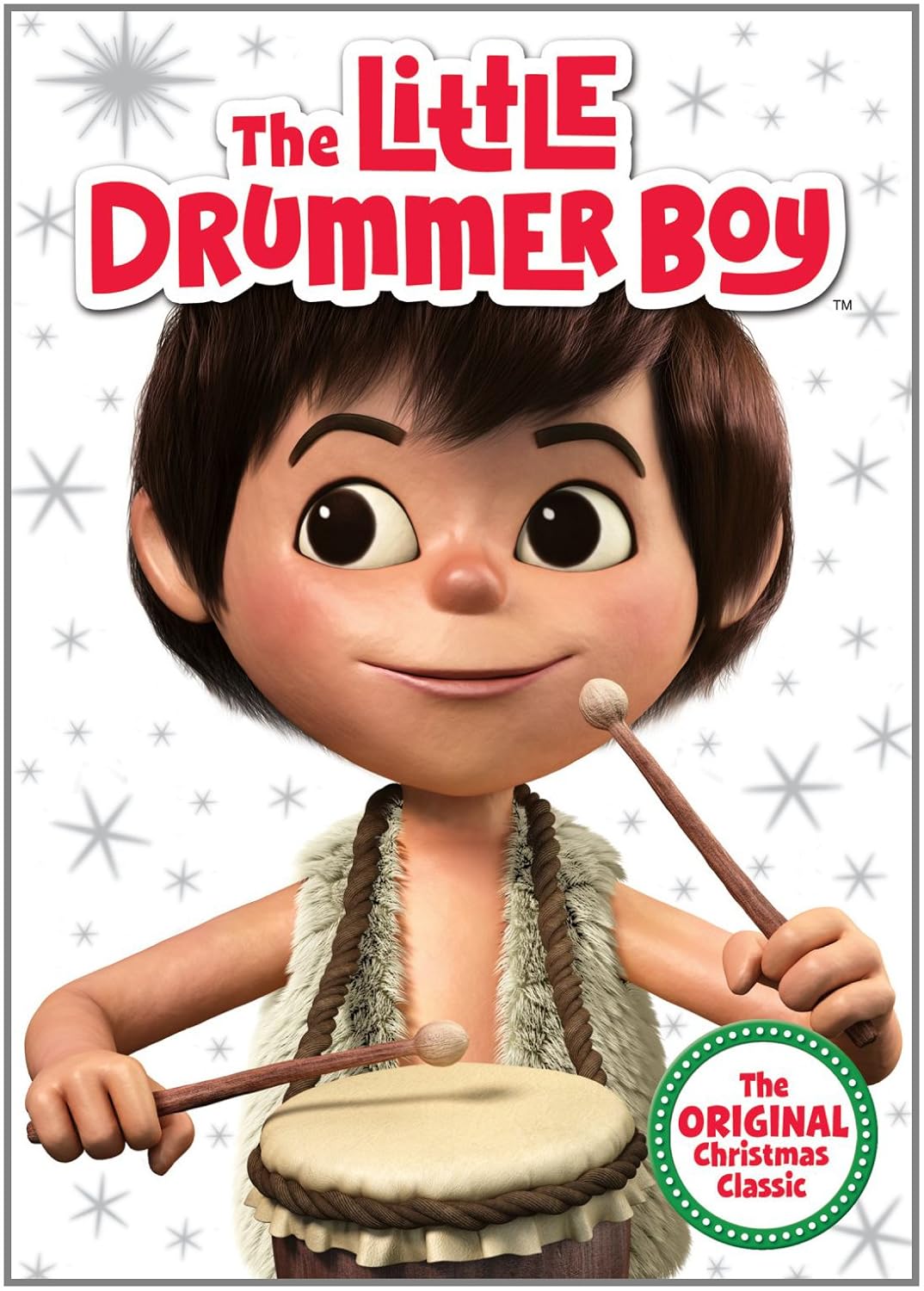
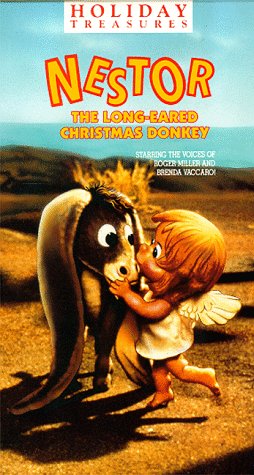
Two Rankin/Bass offerings, Little Drummer Boy from 1968 and 1977's Nestor the Long-Eared Christmas Donkey, are set in Bethlehem when the Savior is born.

I also need to be honest: I haven't watched these two in years.

Likes about them:
  • They're about the birth of Jesus!
  • They show that meeting Jesus forever changes a person!
  • Like Rudolph, they validate our individuality and specialized gifts.
Only available on VHS. Blast from the past!
Dislikes:
  • They are both just...sad. My little kid heart broke for the drummer boy and Nestor. And when Nestor's mommy dies...ugh. I still remember her digging up that patch of snow so Nestor will have a warmer place to sleep--I can't go on!
  • I never liked how cherubs are explained as "animal guardian angels" to Nestor. It's not accurate. Most of the time I go with the flow on these sorts of things, but it's always bugged me.

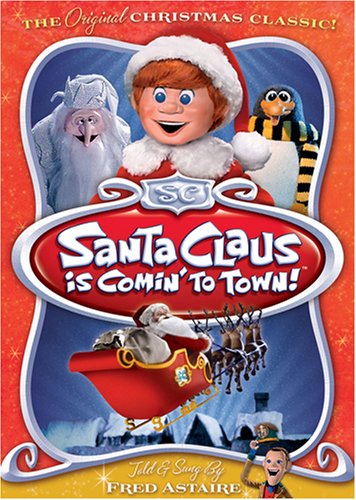
Of the rest of the Rankin/Bass shows I watched in my youth, I dug Santa Claus is Comin' To Town (1970). I still kinda like it for sentimental reasons, even though it's hokey. Why?
  • I love when the elves adopt a baby and name him Kris Kringle. "And he will eat with us and sleep with us and drink warm cocoa with us..." 
  • The Burgermeister Meisterburger is ridiculous, and therefore fun to watch.
  • Young Kris has a red beard. Why do I like that? I don't know. I just do.
  • Maybe it's the romance writer/reader in me, but I loved Kris' Christmas Eve wedding to Jessica. 
Dislikes?
  • The scene where a singing Jessica goes through a groovy "transformation" is embarrassing to me (and my kids, who used to hide behind the couch for this part when they watched this show on DVD). The scene is cut from most TV broadcasts nowadays as a time-saving measure, but you know when the scene happened because after Jessica sings about her "world beginning today" etc., her outfit has a bold splash of color and her hair is a brighter shade of red.

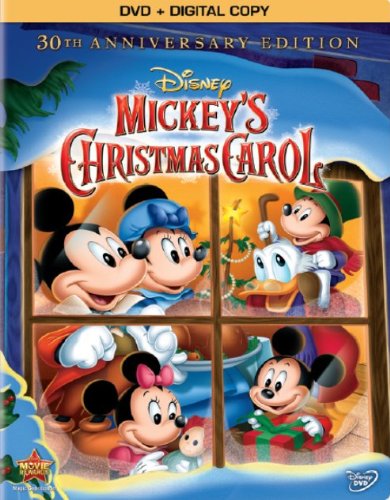
Mickey's Christmas Carol (1983) is often found on the Disney Channel. It is a sweet retelling of Dickens' A Christmas Carol.

I like:
  • I love that this maintains the Victorian look and feel that's often shed in modern re-tellings for children.(I'm referring to Barbie, etc, not the Jim Carrey version, which I'm not including in this list because I count that one as a "movie.")
  • Mickey and Minnie have babies!
But other people don't like it:
  • Remember Siskel and Ebert? They gave it two thumbs down! Something about not enough character growth and a lack of irony. (Um, seriously? If you want irony, there are oodles of other versions of A Christmas Carol out there that do the trick.)

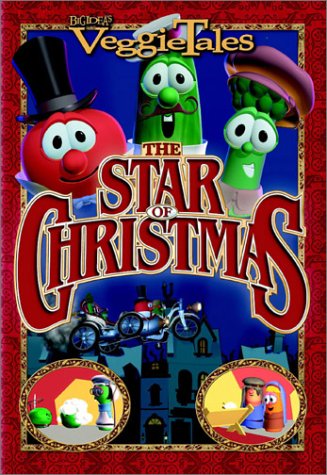
Veggie Tales has a few holiday offerings, but my favorite is The Star of Christmas. (Caveat: this one isn't a broadcast special like the previous offerings, but it was a staple in my house when my kids were smaller.) Cavis and Millward (Bob the Tomato and Larry the Cucumber) are producing a musical to debut Christmas Eve, The Princess and the Plumber, illuminated by zillions of newfalngled electric lights (this is "historic" London, after all). They want to "teach London how to love!"

But, as you'd guess, a Christmas pageant is also scheduled that same night, showcasing a famous artifact (the Star of Christmas, of course!). Which event will the royal family attend? Which one will really, truly share the message of how to love?

Why I love this?
  • It's sweet, convicting, and clever. 
  • The lyrics to "Plugged Up Love" sung by the Princess and the Plumber in rehearsal are hilarious.
  • It's set in England! The royal family has a cameo!
Any dislikes here?
  • Can't think of a one. 

Other shows I liked/watched that see airtime still: Frosty the Snowman (1969), The Year Without a Santa Claus ("I'm Mr. Heat Meister,.."), Twas the Night Before Christmas (1974),  and too many others to list here. But I had to stop the list somewhere.

Ones I never really liked? Those Frosty/Rudolph crossovers where they wear orange outfits...

Did I forget your favorites? What do you like/dislike about the shows I mentioned?

Happy watching this week. And baking, and wrapping, and fellow-shipping with family and friends.

I wish you and yours the Merriest of Christmases!

***

Susanne Dietze is in the mood to watch Prep & Landing. When it's not Christmas break, she writes historical romance, including next month's Austen in Austin Collection. Please visit her website, www.susannedietze.com.

Oh, and do click the link for more ideas of things to do with your kids this week!

All photos from Amazon.com


Friday, December 18, 2015

Are You an Old Movie "Purist"?

by C.J. Chase

My family kicked off the holidays this year by watching Miracle on 34th Street. To be honest, I don't like this 1947 classic about a man who might--or might not--really be Santa Claus as much as most people, but I spied it while browsing the library DVD section. Our eight-year-old (adopted from another country two years ago) had never seen it, so I checked it out.

I didn't expect to find two DVDs in the case, but there they were--one for the original black-and-white version and one for a colorized version. And that got me to reminiscing how scandalized some of my older friends and colleagues were "back in the day" when Ted Turner first started broadcasting colorized versions of old movies.

So, here's the question: colorized or black-and-white? Are you a purist who will only watch old movies in their original black-and-white format? Are you a product of modernity who prefers watching in color? Or are you the flexible sort who will try them both?

To get you started, here are two clips of the same scene from my favorite Christmas classic:


Thursday, December 19, 2013

Take a Christmas Break!


    Christmas is a busy time for everyone.  Sometimes, though, you just have to hold up your hand like a traffic cop and stop the madness.  So as I was heading out to face the local mall melee, I decided to see a movie instead.  It was just what I needed.
    Of course, Christmas is one of the big seasons for movie openings, and I certainly had plenty to choose from, but I went to the only one I had actually been waiting to see:

The Hobbit:  The Desolation of Smaug

    One of the things I always love about Peter Jackson's epic fantasies is his attention to detail and the sheer beauty of his sets and locations.  This second of the three Hobbit movies is no exception.  Even the most desolate location is impressive in its desolation and the creative way it is desolate, like the impossible stairway one character has to climb up the side of a mountain, which is vastly different from the other impossible stairway different characters climb up the side of a different mountain.  Throughout, the sets are beautifully designed and each place is unique and fascinating to look at.

Bilbo (Martin Freeman) and Thorin (Richard Armitage)

    Some might say the acting in a movie like this one takes second place next to the special effects and the epic nature of the film itself .  That may be true, but that does not make the acting here anything less than first rate.  Martin Freeman is perfect as the Hobbit, Bilbo Baggins.  And, of course, anything with Richard Armitage in it is all right by me.  His melancholy Thorin is very touching, especially when he finally reaches his goal and returns to his ancestral home after years of exile.  Benedict Cumberbatch's dragon Smaug is fascinating, hypnotizing and powerful as he sits on (and in) his endless hoard of treasure, and I am happy to say that Sylvester McCoy's Radagast is not nearly as irritating as he was in the first movie of the series.


Smaug the Terrible

    As much as I love Aidan Turner as Kili (a Dwarf), and he is great in this movie even without much to do, I found his "love at first sight" with Elf warrioress Tauriel (Evangeline Lilly) less than convincing and more than unnecessary.  It certainly was implied nowhere in the books, and apart from that, she does little but slaughter Orcs.  And that is exactly what I didn't like about Orlando Bloom's role in this film.  The ten years since he last portrayed Elf prince Legolas have certainly done him no harm, but I would like to have seen him do a bit more than slash through Orcs and narrow his eyes dangerously when Tauriel talks to Kili.
    But those are minor quibbles in a movie that kept me enthralled for nearly three hours.  If you need a break from Christmas shopping madness, I highly recommend it, though you might want to see the first movie first, if you haven't already.  And don't expect a real ending until next Christmas.
    By the way, if you don't like spiders, take something to scream into.  Just sayin'.


What are you doing to take a break this Christmas?


DeAnna Julie Dodson has always been an avid reader and a lover of storytelling, whether on the page, the screen or the stage. This, along with her keen interest in history and her Christian faith, shows in her tales of love, forgiveness and triumph over adversity. She is the author of In Honor Bound, By Love Redeemed and To Grace Surrendered, a trilogy of medieval romances, as well as Letters in the Attic, The Key in the Attic, The Diary in the Attic and The Legacy in the Attic, contemporary mysteries. Her new series of Drew Farthering Mysteries debuted in the Summer of 2013 with  Rules of Murder,  to be followed by Death by the Book and Murder at the Mikado in 2014 from Bethany House.  A fifth-generation Texan, she makes her home north of Dallas with three spoiled cats.   

Share This Post

How Our Giveaways Work: The Official Rules

We, the ladies of Inkwell Inspirations, would love to give free stuff to everybody. Since we can't, we will often have a giveaway in conjunction with a specific post. Unless otherwise stated, one winner will be drawn from comments left on that post between the date it was published and the end of the giveaway as determined in the post. Entries must be accompanied by a valid email address. This address is used only to contact the commenter in the event that he/she is the winner, and will not be sold, distributed, or used in any other fashion. The odds of winning depend on the number of entrants. NO PURCHASE, PLEDGE, OR DONATION NECESSARY TO ENTER OR TO WIN. ALL FEDERAL, STATE, LOCAL AND MUNICIPAL LAWS AND REGULATIONS APPLY. VOID WHERE PROHIBITED.

Pinterest