by Susanne "early bird" Dietze
Ugh, you've skimmed down the post and seen the Plum Pudding, and now you're rolling your eyes. A Christmas post? But it’s not even Thanksgiving!
Yes, I hear you. But trust me. Our friends in England are
shopping for yummy things this week because this coming Sunday is “Stir Up”
Sunday: the traditional day to concoct the Plum Pudding for one’s Christmas
dessert. (Puddings improve with a bit of age, so they are made several weeks in advance.)
When I say "Stir Up" Sunday, do you imagine a wooden spoon mixing flour, raisins (aka plums) and
other goodies in a big bowl? Despite the actual stirring accomplished on “Stir
Up” Sunday, this custom actually got its name from church!
In the Anglican tradition, the last Sunday of the liturgical
year is the week before Advent (which begins four Sundays before Christmas--this year, the date falls on November 22, hence the timing of this post). For almost four centuries, congregations in countries all over the world that used
the Anglican Book of Common Prayer prayed a collect that begins like
this:
“Stir up, we beseech thee, O Lord, the wills of thy faithful
people…”
Hence, “Stir Up” Sunday. Nice that it fits with
pudding-making, too.
(Fun note: This prayer was included in the Gregorian Sacramentary, which dates from approximately AD 600.)
(Fun note #2: Since 1970, the last Sunday of the liturgical year in liturgical Protestant traditions has been known as the Feast of Christ the King. On that day, those in the Anglican tradition pray a collect that is more appropriate for that day. However, Anglicans still pray the "stir up" collect on the Third Sunday in Advent!)
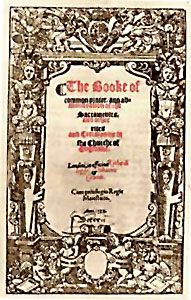 |
| 1559 Book of Common Prayer--stir up our wills, Lord! |
But back to pudding.
In days of yore, English families went to church together on “Stir
Up” Sunday, then came home and met up in the kitchen to mix and steam the
Christmas pudding. Everyone, from children to servants, took a turn stirring
the pudding. The reasons for taking turns were both sentimental and practical: everyone got to make a special wish when they stirred,
and the labor was distributed, because the stirring is harder than it sounds. The
dough is thick and requires muscle to mix well.
 |
| Stop tormenting your sister, young man, or you don't get to make a wish! (Found here.) |
Stirring was supposed to be done east to west, to honor the
journey of the Magi to the Christ Child.
Clearly, puddings were a big deal, steeped in tradition and ritual. Not just the stirring, but the whole process. Some recipes include thirteen ingredients, one for Christ and each of the disciples. Families often made two, one to keep and one to share.
After the stirring process, the pudding was steamed and set aside for a few weeks to age. Then, before serving, some families added tokens to the pudding (by pressing them into the squishy dessert and, one imagines, covering the holes with decorative holly). One’s “fortune” was told by
the token one received in one's slice: a shoe meant a journey ahead, a ring meant marriage, a
wishbone indicated good luck, a thimble foreshadowed thrift, and a coin meant
wealth.
Today, most people expect a token placed underneath their slice, a safe place so one need not nibble ever-so-carefully to avoid breaking a tooth or choking on an unexpected surprise. Also, sadly, most people today don't stir their puddings on "Stir Up" Sunday anymore. Not when there are so many puddings ready-to-eat in the market.
 |
| We had a Downton Abbey brand plum pudding for dessert a few years ago...and we set it on fire and everything! |
Whether or not you craft a plum pudding this coming Sunday,
I pray you are “stirred up” by the Holy Spirit to do the good works He intends
for you to do!
Including preparations for Thanksgiving next week. ;)
(Fun fact #3:
Inky Debra E. Marvin makes plum puddings! Read her post on how to do it
here!)
***

Romance novelist Susanne Dietze wishes you a Happy Thanksgiving despite the Christmas-nature of this post. Thanks for reading this far in the spirit of holiday goodwill.